Showing posts with label not actually reviews. Show all posts

Wednesday, July 20, 2016

Ghosts: A review of Ghostbusters

St. Thomas Aquinas explains: “thus also will his body be raised to the characteristics of heavenly bodies — it will be lightsome (clarity), incapable of suffering (impassible), without difficulty and labour in movement (agility), and most perfectly perfected by its form (subtlety). For this reason, the Apostle speaks of the bodies of the risen as heavenly, referring not to their nature, but to their glory.”

Ghostbusters was not rebooted: it died and was resurrected, shining, impassible, agile, and subtle. From the trailers and one or two reviews I expected it'd be mugging for squees, one of those family films with a layer aimed at kids and another layer aimed at adults who like to say stuff like "adulting is hard :(" a lot ... but it ain't that in the least.

It's shining. It seems to do that thing (that I think Orange is the New Black and maybe Unbreakable Kimmy Schmitt does) where the mild psychological complexity and heft requisite for realist comedy sporadically dissolves into clomping, larger-than-life sketch comedy ... but then the realist comedy somehow reassembles straight afterward as if nothing happened, and you're back with characters you care about. It's not about breaking the fourth wall: it's about passing through innumerable walls, temporarily demonstrating your spectrality.

ghostbusters reboot sequel

Reckon it needed to be five minutes longer, to give significant plot points their due weight. Ideally take like twelve minutes, and give Patty some backstory and/or development, and ectoplasm out the ghosts as characters too. Maybe the combat ontology could have been a little more firmly established before the big showdown too. Because I wasn't quite sure what their gear could do, the Ghostbusters felt even more immortal than normal characters-that-will-definitely-be-fine. Also, Zach Woods inexplicably survives a very glowy, goopy, should-really-be-game-over first brush with the undead, which kind of makes the undead look a bit dud and inept.

So how to tweak those things? Well, maybe lingering on Bill Murray's broken and bloodied body would have been one more handy reminder of the stakes for mortals. And during the back-alley gizmos showcase scene, just a boring line along the lines of, "With these new side-arms, we no longer need the box on the floor to snare these wraiths, ladies; we may dissipate their morphic resonance directly" -- and then a joke -- might have made the later haunty heiny-kicking hijinks more immediately legible and compelling. And/or your man Rowan could have had a spooky security guard helping him out at the lab as an excuse for a mini-tutorial in ghosts vs. Ghostbusters (that mini-showdown felt pretty rushed anyway). So maybe it needed to be fifteen minutes longer. But could get away with five.

Cecily Strong is brilliant and I hope she gets a bigger part in the sequel. Also ... are they actually almost corpsing in a proper big film in the Technobabble ex Machina bit? Kevin's character is less believable than any of the swirly baddies, but that's OK. I could have done with a little more muppety body horror and grotesque visual gags, but now I'm just nitpicking. Totes ace, Thomist af.

Or ...

What is a movie, anyway? A movie begins to be interpreted before it's even been fully shot, and those interpretations must still be interpretations of the movie, right?

John Milton: "The mind is its own place and in itself / Can make a Heav'n of Hell, a Hell of Heav'n."

Here's the question. Is the Ghostbusters eventually seen by the misogynists who are determined to hate-watch it -- and whose experience of the movie is textured and colored by their fruitful, ingenious expectations -- is that part of the real Ghostbusters movie or not? 

I believe Ghostbusters got loads and loads of star ratings, both positive and negative -- mostly negative, from folk who objected to the genderflipped reboot (and the positive ones possibly in the spirit of redressing the balance) -- from people who probably hadn't seen it.

If there are real criticisms to be made of the film, maybe they should be of the swirling green CGI hell version of it, the version that deserves to be whipped into boxes with protons for its essential ugliness, the film as it is construed in the hearts and minds twisted resolutely against it. It's a version of the film I haven't really seen, maybe can't ever really see. But that's what would be necessary, to honor not only the genderflip but also the flip that was there already: the flip that makes what is dead live and what is in hell heavenly.

Also I'm glad there was a Swiss army knife in it, because (a) we've been discussing them a lot recently and (b) it reminds me of the line in the play Woundman and Shirley that describes Woundman as looking like "sort of a cross between Bill Murray and a Swiss army knife."

Also Ghostbusters could make an interesting location-based AR game. Gotta bust 'em all.
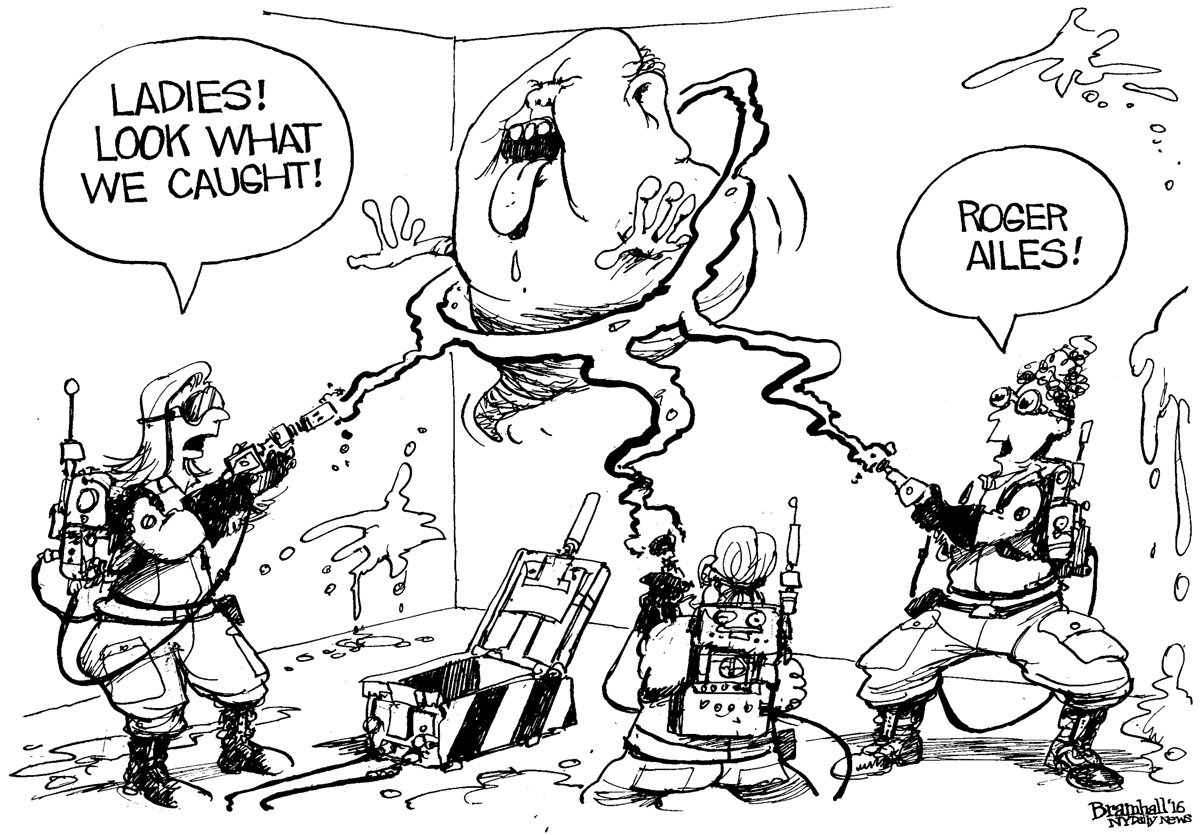


Also more like Slimo Yiannopoulos but whatever.

Also ScotCoin: I ain't afraid of no groats.

Also I think one of the things that stops Holzmann being just a tube for squirting kook is those moments where she gives brief, assured, no-nonsense tutorials on the stuff she's made. I feel like I've met people like that? They act out so much you think they're going to be actors or poets or something, and then you realise that they're scientists or engineers, and that blend of arrogance and joy and insecurity and yearning trollishness is actually grounded in a sense of, "fuck it, if all else fails at least I know how to make stuff." Maybe?

Also have you seen Ghostbusters? It's not as good as the BOO!

Tuesday, March 15, 2016

Notes (mostly to self) on N.K. Jemisin's The Fifth Season

(Technically spoilers ahead)

* Assured, immersive, easeful, affecting, solid, a sense of being timely, up-to-date, "core." Colloquial. Ambitious without feeling strained. Makes it look easy (sprezzatura).

* The methods are obvious: good storytelling, good worldbuilding. Of course that's just the beginning. What does The Fifth Season teach us counts as good storytelling, good worldbuilding? What is a 'story' and/or a 'world' at this precise moment in history, at this particular textual nexus? (Could I go so far as to say 'strong characterization' or even 'relateable characters'? What does that consist in?)

* So very distant from Tolkienian epic fantasy. And yet finds ways to rekindle its pleasures?

* The conceit that ecological catastrophe can be averted and/or fixed through the power of the imagination (in the book, 'orogeny'). And/or: the conceit that ecological catastrophe can be averted/and or fixed through worldbuilding (cf. normal sense of orogeny, mountain-making). Comforting. Reflexive. (Surely we all fear climate change now. Perhaps the deniers most of all).

* Do storytellers only speak to their listeners? Or also for their listeners? What are the stories we most desire to hear? Are they the same as the ones we most desire to speak? Are they the stories we cannot find the words or images or names or skill to express? Are they what we fear to say, or are too traumatized to say, or rightly know we should not say?

* Anything to say about pronouns & POV?! Second person really works, especially when strands come together at the end. Cf. Banks Feersum Enjinn (structure wise) and (pov wise) Okorafor's Lagoon and Phoenix, Banks' Complicity, Leckie's Ancillary.

* A protagonist who commits massacres. "They will not realize for weeks that you killed the town in this moment" -- the town, ambiguous between object and humans. The realization "I killed Uche" rather than the realization "look what I've literally just done, look who I've killed, look who I may have killed though there is perhaps still time to do something about it." How do we think about "problematic" in relation to that huh.

* To generalize ahistorically a little about what "great storytelling" is ... could it sometimes be figuring out how to "have things both ways"? In Fifth Season I sense these are "my" politics and yet they are owned more expertly, more luxuriously than in real life: they aren't fraught with the same dangers, there is no sense of self-denial on political principle. Yes, there is conflict, there is estrangement ... but the fit between myself and the politics embodied here, that feels natural, comfortable, inevitable. Cf. story sludge.

* How much concern is there with subjectivitybuilding, i.e., how much is the strangeness of the world reflected in the strangeness of the personality types? I think not much. Just slightly though. For the most part these people, despite it all, are us. (Becky Chambers's Long Way as an example of taking it even further. Definitely contemporary personality structures projected into the future).

* A premium on educational capital. The book feels like it esteems education. Hard knowledge work.

* That extended subplot about getting the kind of respect they deserve. Could it seem weird and petty? The fact that it doesn't, is that because of cognitive estrangement / allegory? There is no mistaking it for something that is merely in the story-world. It is 100% about a certain style of brutally brazen interpersonal racism. Episode makes sense because it is interwoven in some way with the real world. We know this isn't just about fictional identity characteristics, fictional decorum, fictional formal equality, fictional regimes of rights. The intensity of that connection managed upward and downward in different episodes and aspects. We KNOW what word is behind the word "rogga." At other points, particularly the more institutional / systemic persecution of the orogenes, less of a one to one correlation?

* Just btw: it's one of those books where by convention the characters are assumed to literally play host to the words that are "from" their "POV." E.g. "what made her think 'ready'"? (Not exact quotes here).

* A sustained downgrading of the concept of "the end of the world." The world ends all the time, it's nbd. A sustained play on the shared planet we all live on and the (capitalist individualist?) personal world, as in "my whole world shattered that day" or "my son was my whole world" (really? Did he have an atmosphere? Arable lands?) Cf. in its many variants, "nowadays it is easier to imagine the end of the world than it is to imagine the end of capitalism." Question: how does this book make me feel, in the end, about ecological catastrophe? More anxious or more comforted? And what else? And does what it makes me think align to what it makes me feel?

* Stone people. Cf. Pollock's and especially Pratchett's (trolls and golems)? Lithic agency!

* Not happy about the Malthusian edge. And the quasi-authorial interjections about what "matters." Cf. 'Farnham's Freehold' etc. Of course again, super skilled handling of a core strand of sf, albeit an evil one.

* A lot of quiet kink. Fulcrum obviously abusers, but also the faint logic of BDSM. And the "shut up I'm here to fuck you" breeding programme stuff (although that does lead to some genuinely seriously unsexy zero enthusiasm "sex"). But a lot of the time, hard to say why exactly, but it's kinda hot. " I can't tell if this novel is flirting with me or not and the hottest part of it is that I can't even tell."

* So, HOT.

* Does it throw you in at the deep end? And then reward you for sticking it out, 100 pages or so in? At the same time it's not exactly a steep learning curve. Or at least you're I in no doubt iit is going to make sense eventually.

* The final chapters quietly virtuoso in giving the reader a lot of what it is rumoured to most like. Sex, big fights, death of reasonably major characters, a sort of structural twist (of the engineered-by-withholding kind -- cf. e.g. Banks's Use of Weapons and Feersum Endjinn -- which I find nonetheless gratifying), a show-down with a nemesis, a sort of motive twist (last word of novel, saw it coming btw, cf. Feersum again), a coming-together-of-two-storylines, a controlling gaslighting abuser resisted with a defiant existential self-assertion, horrific "sacrifices" (hmmm & cf. Ringworld), action sequences fragmented around interposed aphorisms/horoscopes ("There are moments when everything changes"), apocalypse(s), a special power leveling up, etc. Oh and a glossary!

* Title. Box sets.

* What happens when two characters merge? Cf. marriage. Cf. rightsizing, Mergers & Acquisitions. Cf. how it plays out within the folk poetics of relateability. (What if you like one character and hate the other, and they turn out to be the same?)

* Interesting thing with "you" turning out to be in the other story. Because in another way, of course you the reader had to be there all along, to bring it to life.

* Cf. the powerful and persecuted protagonist of Phoenix. One very distinctive thing: Fifth Season has a sense of record-breaking. I.e. this is something that speculative fiction often does, and here a new record has been set for doing it in a particularly difficult and intense way. (Jemisin makes it look easy, of course). One thing in particular. That is the reconciliation of being special and powerful and magical with being persecuted and oppressed and abused. Jemisin reconciles an extraordinary level of power with an extraordinary level of persecution. "Gods in chains."

Wednesday, March 9, 2016

Interzone Book Zone Hivemind

As well as the usual reviews, the December/January Interzone has some reviewers' top picks from 2015 (ish). Here's what I wrote.

*

Sandra Newman’s The Country of Ice Cream Star (HarperCollins) is technically a YA post-apocalyptic quest, but only in the way that, say, a jack-o’-lantern is technically a berry. Newman’s wrenching, bloodsoaked 600+ page epic is told almost entirely in a speculative English, mostly estranged AAVE with fragments of French (via Senegal) plus wry phonosemantic matches: bon becomes bone and so on. Sparks slip between what words mean to Ice and what they mean to us, so a phrase like “vally and bell” (brave and beautiful) may also ring out like a bell in a valley. It’d be easy to get hung up on the linguistic surface, but the point is really the passion, intelligence and wit unleashed from this shattering language.

Berit Ellingsen’s Not Dark Yet (Two Dollar Radio) is the kind of novella that it’s tempting to call ‘enigmatic.’ Yet it is so self-possessed, so straightforwardly timely, and gazes at you with such open, disciplined frankness ... by the final page, it feels simple and necessary, and all other stories have become enigmas. Ellingsen’s anonymous protagonist applies to be among the first to fly to Mars, while quietly living in a cabin among the owls, humans, and hurricanes of near-future ecologies. Uh, pretty dark already?

Two science non-fiction top picks: Steve Aylett’s Heart of the Original (Unbound) is ostensibly a collection of short essays about creativity; Aylett is, as he sometimes points out, a very, very, very brilliant and original writer. “They pounced, two clowns holding me by the arms while a fourth beat the bejesus out of me.” His work is also tremendously funny, and a bit rebarbative, although he is always kind enough to give the reader some way in. The way into his Heart happens to be reflexivity: there’s a lot of Aylett reflecting on Aylett, with some Thus #Lifehacked Zarathustra thrown in. Eat Aylett’s Heart out, but also beg for a new novel soon.

Laurence Scott’s witty, erudite and utterly selfie-indulgent The Four-Dimensional Human (William Heinemann) is by far the best thing I’ve read about the experience of living with – or living through, or as – social media. Although Scott’s analysis is constrained by the necessity of staying always charming, his meticulous scrutiny and figurative ingeniousness frequently take him far beyond familiar observations.

Five more, briefly: I think Kelly Link perhaps has some imitators, but her latest utterly seelie-indulgent collection of short stories Get in Trouble (Random House) demonstrates she’s still the best Kelly Link on the block. Peter Newman’s The Vagrant (Harper Voyager) is a dark science fantasy, elevated above functional swords ’n’ scariness by its deft downtime: the snatched tender lulls within a crapsack wasteland, the comic flailings of toddler and goat. Karen Lord’s social science fiction Galaxy Game (Del Ray) is a cozy-yet-creepy, subtle-yet-leaden novel of sports, psionics and cosmopolitics. It’s admirable for its serene, twinkle-eyed affront to everything holy in genre storytelling wisdom, but maybe does less with that than did its prequel, The Best of All Possible Worlds. Jonathan L. Howard’s weirdboiled crime-horror novel Carter & Lovecraft (Thomas Dunne) is contemporary, smart, pacey – and gets you to care, despite its glitching reality and homage to campy tentacles. Also see Emma Newman’s Planetfall, reviewed in the same issue.

*

And I went ahead and compiled the other reviewers' choices. If you want to see who liked what and why, get the issue!

Alexis Wright, The Swan Book
Laura van den Berg, Find Me
Sara Taylor, The Shore
Catriona Ward, Rawblood
John Mandel, Station Eleven
Michel Faber, The Book of Strange New Things
David Hutchinson, Europe at Midnight (more recommendations than anything else)
Chris Beckett, Mother of Eden
Cixin Liu, The Three-Body Problem
Cixin Liu, The Dark Forest
Ann Leckie, Ancillary Mercy
Ian McDonald, Luna: New Moon
Aliette de Bodard, House of Shattered Wings
Max Gladstone, Last First Snow
Kirsty Logan, The Gracekeepers
César Aira, 3 Novels by César Aira
Rod Duncan, Unseemly Science
China Mieville, Three Fragments of an Explosion
Kim Newman, The Secrets of Drearcliff Grange School
Paul Meloy, The Night Clock
Michael F. Russell, Lie of the Land
Joyce Carol Oates, Jack of Spades
Jonathan Edwards, My Family and Other Superheroes (hey wait no fair I didn't know we were allowed poetry)
Kate Tempest, Hold Your Own
Don Paterson, 40 Sonnets
Claudia Rankine, Citizen: An American Lyric
Sam Gayton, The Snow Merchant
David Baddiel, The Person Controller
Julian Clary, The Bolds
Kate Atkinson, A God in Ruins
Iain Banks and Ken MacLeod, Poems
E.J. Swift, Tamaruq
Kazuo Ishiguro, The Buried Giant
Brian Taves, Hollywood Presents Jules Verne: The Father of Science Fiction on Screen
Piers Bizony, The Making of Stanley Kubrick's 2001: A Space Odyssey
Paul Levitz, The Bronze Age of DC Comics: 1970-84
Lance Parkin, Whoniverse: The Unofficial Planet-by-Planet Guide to the Universe of the Doctor, From Gallifrey to Skaro
Stephen Jones, The Art of Horror: An Illustrated History
Adrian Tchaikovsky, Children of Time
Kim Stanley Robinson, Aurora
Carolyn Ives Gilman, Dark Orbit
David Mitchell, Slade House
Ann and Jeff Vandermeer (ed.), Sisters of the Revolution
Julie Wosk, My Fair Ladies
Adam Roberts, Rave and Let Die

Tuesday, October 20, 2015

Spoopy

Here's Cheryl Morgan's little post about last night's BristolCon Fringe, which was the first I'd ever been to, & very enjoyable in a slightly squirming kind of way.

Joanne Hall read from Spark & Carousel. To the Oedipus Complex and the Electra Complex there must now be added the Allorise Complex, where you really really secretly want to kill your dad and then bring him back and then kind of sock-puppet him. The bits that stood out for me were the witching rite itself -- a passage at once numinous and technical, and with a disconcerting resonance with self-harm imagery (especially when Allorise thinks about control) -- as well as Allorise's da's existential frustration the next day ("his jaw worked furiously"), played against her prim banter over brekkie.

Jonathan L. Howard's reading from Carter & Lovecraft was filled with promising wryness and many deft little touches: a scrap of paper, where a missing child's mother had scribbled a license plate number, has been traced over thickly for clarity; the trope of the psycho wall is unfussily lampshaded ("he'd done the thing no real serial killer ever does") and then slots into the plot unproblematically, etc. There was nothing overtly supernatural in the bit we heard, but it's playing with Lovecraftian themes and content, and one thing I'm interested to see is if there will be any touches of Lovecraftian style introduced into its predominantly spare, weird-boiled texture. Will the unnameably squamous put in an appearance? Is anybody going to feel a bit febrile?

UPDATE: I read it, and it was enjoyable. In lieu of a review, here're Joanne Hall's and Cheryl Morgan's. (Just bought Spark & Carousel too! Reviewed here by SJ Higbee).

*

Slightly separately. One of the questions which came up (about moral responsibility, prisons and asylums) made me wonder: is there any speculative fiction out there which focuses primarily on a society without incarceration? The abolition of prisons as utopian, perhaps? Or where the concepts of crime and punishment are totally reconfigured in some other way?