Showing posts with label prizes. Show all posts

Friday, October 11, 2024

Gender, democracy, and SFF literary awards

Polina Levontin and I wrote about gender, democracy, and SFF literary awards (the Hugos, the BSFA Awards, my own Sputnik experiment, plus a cameo by the Clarke Awards) in an article published by Foundation (thank you Paul March-Russell). Join up here and/or email me if you'd like a copy.

Here's an abstract:

This article explores cultural and design dimensions of non-governmental voting systems, focusing on science fiction and fantasy (SFF) literary awards voted for by fans, via three case studies: the Hugo Awards, the British Science Fiction Awards, and the Sputnik Award. The design of such voting systems needs to juggle a range of goals, one of which is fairness with regard to gender — acknowledging that ‘fairness’ is not straightforward to define, particularly given such awards are embedded within broader gender inequalities. Our analysis on the available data suggests that men have been more likely than women to vote for works by men, and also more likely to vote in ways that amplify the influence of men’s votes under an Alternative Vote System. We suggest that SFF awards are cultural spaces which lend themselves to experimentation with new democratic forms, and briefly offer potential sources of inspiration. Just as SFF has aspired to be a space to think about the future of technology, gender, the environment, and many other issues, SFF award spaces could be spaces for thinking about the future of democracy. We also offer recommendations to SFF awards designers and communities to address gender bias (emphasising reflective practices over technical solutions), and to continue to explore how aesthetic and cultural values and identities are constructed and negotiated within SFF award spaces, and beyond. 

And some diagrams (though I think these were very slightly updated in the published version)!


And here's a snippet:
Preferences are not the only gendered aspect of voting for literary awards. For example, we discovered that men tend to rank more options on the ballot. This offers some weak evidence suggesting that men are more likely to vote for novels they have not read. The 2020 Award featured a particularly long shortlist, and men were 80% more likely than women to rank more than six nominees. The 2020 Awards shortlist was announced on 18 February, with voting beginning shortly thereafter and closing on 3 April. More votes per person for male voters might also reflect gendered differences in reading habits throughout the year, if men read more and more varied-in-style science fiction than women (see e.g. Atkinson (2016) for an exploration of gender and class aspects of reading taste in the UK). However, extremely low-ranked preferences (the 7th-10th places) are unlikely to exert influence on the outcomes. 

Men’s tendency to vote for more authors per voter amplifies statistical differences in correlations between female and male voters. If men are more likely to vote for books they have not read, this would make their choices less reflective of their true taste, explaining why their preferences appear less correlated than women’s. However, more omnivorous reading could also have a similar statistical effect. Both explanations could be true simultaneously: within this voting community, men may be more likely to vote for books they have not read, and may read more widely (hence voting for more of the books they have read). 
Footnote: 
It is important to emphasise that the gendered reading dynamics within BSFA voters, drawn largely from the British public, may not be representative of the gendered reading dynamics of the British public as a whole. A higher percentage of women read daily than men do, and a lower percentage of women never read compared to men.


Monday, January 2, 2017

Interzone Guest Editorial

This week we announced the two finalists of the Sputnik Awards 2015/2016. Here's a guest editorial I wrote about the prize for Interzone 265 back in July (slightly tweaked).

BEST IN SHOW

After two years of faintly fusty Hugo Awards, the announcement came as a breath of fresh air with a zesty tang. In June, at WisCon 40, Nalo Hopkinson launched The Lemonade Award, to be presented for kindness and positive change in science fiction. The trophy is truly sublime. In fact, SubLEMON: each winner gets a sleekly fluted silvery Alessi® PSJS Juicy Salif Citrus Squeezer, a monstrous twelve-incher straight out of H.R. Geiger. When life gives you lemons, no one can hear you scream. Nalo Hopkinson should probably get the Lemonade Award for starting the Lemonade Award.

Meanwhile, signs of life are everywhere twitching. The Clarke Award, celebrating its 30th birthday, energetically contemplates future evolution. The new Eugie Foster Memorial Award plans to celebrate the best in innovative short SFF. Schneier and Quinn’s mathy analysis of mooted Hugo reforms show how things learnt in the context of fandom might have wider application. At File 770, Catherynne M. Valente and others toy with the notion of a new swarm of fine-grained smart prizes: ‘Best Action Sequence,’ ‘Best Twist,’ ‘Best Ending,’ ‘Best Villain’? ‘Best New Award’? Call them the Spoilers, Bruce Baugh suggests: “Make the trophy like a sci-fi hot rod’s spoilers. Seriously.” On YouTube, ambient SFF love reaches dangerous critical density and the BooktubeSFF Award bursts into existence.

And Sam Walton and I – from an original inkling by Ian Sales, and with assistance and dazzle from some dozen brilliant others – have created the Sputnik Award™. The winner receives a generously donated one year supply of Interzone. To delimit the Sputnik constituency, we’re adopting Valente’s procedure: “vote if you want, who gives a shit.” Voting is now open at www.thesputnikawards.com.

In fact, everything about the Sputnik Awards™ is open. It’s entirely experimental, and hopefully next year it will be a new experiment. We have settled on two themes to guide its evolution. One is digital democracy, or perhaps more generally, social media. Literary awards build spaces where fun and interesting conversations can occur, right? But you can say that about a lot of stuff. Perhaps a more compelling analogy is with user-driven content ecologies such as TV Tropes or Wikipedia. We collectively get back what we collectively put in, but that content is incentivised and transformed by a carefully-designed infrastructure. So could inputs be more varied than ‘books and votes,’ and the outputs more varied than ‘cultural capital’? We’ll see.

The second is politics, perhaps particularly left-wing politics. In 1843, after Arnold Ruge overheard Marx and his friends throwing him shade, Marx wrote to Ruge claiming that, “Ruge babes, our task is the ruthless criticism of everything that exists, babes.” Later that day, he wrote Capital. With Marx’s maxim in mind, perhaps the Sputnik Award™ trophy should be an almost traumatically vituperative critique of the winning novel. It could be, in Theodor Adorno’s words, written “from the standpoint of redemption,” and embedded in plexi-glass. Politics hasn’t decisively informed this year’s selection, but starting with next year, we’d like the Sputnik Award shortlist to give special attention to SFF with radical democratic themes, promoting social and economic justice, and celebrating not just individual freedom, but also collective freedom.

Oh and it’s Dungeons & Dragons themed, except with hedgehogs and stuff. It’s kind of dumb. Check it out.

Tuesday, June 14, 2016

And the Award for Best New Award Goes to …

I guess maybe the Puppies are to blame for the Sputnik Awards. Or at least: for the Sputnik spark.

The Hugo Awards, arguably the most prestigious literary prize in genre fiction, have been going through a bit of a funny patch. Here’s one of the Chief Puppies, Brad Torgerson, giving his side of the story:

“Worldcon and fandom alike have tended to use the Hugos as an affirmative action award: giving Hugos because a writer or artist is (insert underrepresented minority or victim group here) or because a given work features (insert underrepresented minority or –” SHUT UP BRAD! INSERT SHUT UPNESS!

For two years, a loose-knit fan community – the Puppies – have been eyeing up the Hugo nominations process like they’re h4ck3rz or something. Entryism! They’ve spotted the Hugo Awards’s vulnerabilities! They’ve managed to pack Hugo ballots with right-wing entries that almost nobody who votes actually wants to vote for, thereby making the Hugos like any other election.

And many of the liberal or progressive or radical science fiction and fantasy type people are really upset. Crushed. The crushedness itself is slightly nerve-wracking, actually: it’s always a bad sign when your political enemies seem to be having more fun than you are, and Sad and Rabid and Near and Quasi Puppies seem to be kind of yukking it up.

Every cloud has its Dr Chuck Tingle, of course, kissing the sky right in its kisser. And every cloud has its zany strobe of camera flashes: in this case, a bit of mainstream press attention for speculative fiction, in a you’ve-been-papped-by-like-The-Guardian-at-your-shambolic-dumpster-fire-worst kind of way. Seeing yourself the way others see you … that can be a wake-up call, right? So could Puppygate turn into speculative fiction fandom’s long, emo stare into the mirror, the one that then cuts to an inspirational training montage?

In other words, what are the Hugo Awards for?

Okay, they are something to do with having an enormous party, but if this way of having an enormous party is bumming everybody out … I don’t know, could we do it differently somehow?

Or okay, they are something to do with bestowing honour, but do we need all this honour? What is all this honour for?

Juried awards can claim that they surface books of literary merit, books that would otherwise languish in obscurity. Languish. It’s a good bet that the judges who decide awards like have read everything on the shortlist. But the Hugos are a popular vote, decided by the fans. That means the judges are anyone who is willing and able to pay at least $50 for a supporting membership of the World Science Fiction Society: giving them voting rights for both the current year’s nomination stage, the final ballot, and the right to nominate for the following year’s awards.

Anyone who is willing and able to pay, and nobody who isn’t willing and able to pay. I’ve done it twice, and felt super special and powerful, and included in a community, or an illuminati – a communinati? – and also like a total interloper and impostor. How many Hugo voters actually read everything on the novel shortlist? I sure didn’t! You guys I am barely literate.

So should we feel bad if we haven’t read all those books, or most of them? Or even some of them? How much weight should we put on a trusted recommendation, or on knowing an author’s other work? What about the fact that some books tend only to reveal themselves on re-reading? But then again, isn’t a book that really knows how to serve it even on a shallow skim something worth honouring? And if books do sometimes get honoured because it is in some sense that author’s time – maybe because they wrote a great book in a previous year that somehow didn’t nab its accolades – what are the pros and cons of that? And when you vote for a Member of Parliament in a General Election, how much do you know about all the different candidates? Have you read them, drag style?

I don't know how I'd answer many of these questions. It's plausible that it's at least an okay thing to have a big SF award that is fairly open to a lot of voters, although with some kind of filters even if they're not perfect, and where the voters have often read the book they're voting for, even if they've not exactly exhaustively examined the shortlist, and where there's enough of a critical mass that everyone can get bit excited and argue and squee, and of course have some speeches and a big party, and people can either dress up fancy, or maybe just hang around outside and be a bit sarky and check Twitter a lot, or maybe just watch it online from some other part of the world. That seems like a reasonable model.

Although, if that is our model, shouldn't some of that be reflected in how we talk about the accolade, once it's been awarded? Shouldn't it be reflected in how we feel about the accolade? And is that really how we feel about, say, the Hugo Awards? Hmm.

The Hugo Awards have no doubt played a crucial role in constituting speculative fiction fandom as a public from the 1950s to the present. Digital technologies have now probably taken over much of that particular functionality, in terms of giving people the incentives and means to stay connected. And speculative fiction itself has a momentum that doesn’t require any further acceleration force: speculative fiction is already everywhere. It's bigger than the Hugos. It’s Hollywood, baby. It's almost every video game. It’s Patreon. If WSFA memberships used to use “put your money where your mouth is” as a way of sorting the truefen from the fakers and wannabes, then Patreon now allows the same thing on a bigger scale and at a finer grain.

This could be a good thing for the Hugos, and other high profile speculative fiction awards. The Hugos, having helped to kickstart something big, are now freed up a bit. They don't have to focus on raising the profile of speculative fiction; they can do other stuff. Perhaps reflecting political dispute is actually the right thing for the Hugos to be doing right now? So ... maybe they don’t need to be ‘fixed.’ Maybe they’re … working just fine?

But! At the same time, speculative fiction’s culture wars also feel oddly parochial. Okay, if you’re reading this (see note), most of you probably on the whole want the North American liberals (peppered with North American progressives and radicals and Europeans) to win the literary prizes, and the North American alt-right (peppered with well-meaning but cossetted conservatives and outright neo-Nazis) to definitely not win the literary prizes.

But doesn’t it feel like there could be more at stake here? As though a debate has begun, and just technocratically "fixing" the voting system -- while probably worth doing -- shouldn't be an excuse to dial down that debate?

Just for starters, the institution is called WorldCon, so could it maybe be a bit worldier? On the evidence of who actually makes it onto the nominations list, and the cities which successfully bid to host WorldCon, what ‘the world’ means here is many diverse locales around the USA – or, at best, around the Global North.

There's also the closely-connected question of which accessible pipelines culminate in eventually being a Hugo-contender. One nice thing about the Hugos their association with arguably the most prestigious award for baby genre writers, the John W. Campbell Award for Best New Writer. Because of how it’s set up, it tends to go to writers who can appear in a blaze or splash (or more riskily, a blaze and a splash). For reasons I won’t get into here, I actually quite like that aspect of it, and I generally feel pretty warm toward the award … but my hunch is that citizens of the densely proliferated cultural infrastructures of fandom in North America and the UK have a real head start in concocting these meta-literary forms of blazes and/or splashes.

But more generally, discussions on how to reform the voting system so that the Puppies can never game it again are breathtakingly brilliant in their meticulousness and rigour – and mathematical analysis of mooted Hugo reforms, by Bruce Schneier and Jameson Quinn, suggest how things learnt in the context of fandom might have wider application – but desultory in their lack of any wider examination of political context.

Let's put it bluntly: is the fear that the Hugos is taken over by racists? Well, if so ...

... historically, the Hugos have been a set of awards given annually for the best science fiction or fantasy works and achievements by white men during the previous year. This is starting to shift, but just because you’ve provoked a right-wing backlash doesn’t mean you're now suddenly definitely the good guys. It doesn't mean you’ve found the hill you need to die on just yet. If WorldCon really wants to put up a fight against racism, maybe it also needs to at least take a good hard look at its US-centrism ... and that $50 voting fee.

There is an awful lot I don't know about the history and current insider controversies and practicalities Hugos, and I also have a sense of not knowing what it is I don't know. I am just a wee bit wary of, you know, treading on toes that angels fear to tread on. Which is perhaps why the energy which might have gone into a nuanced and well-informed and constructive critique has ended up pouring into a preposterous Something New instead.

Cue Sputnik! Now we need a good trophy. In 1843, after the left Hegelian political philosopher Arnold Ruge overheard Marx and his friends throwing him shade, Marx wrote to Ruge claiming that, “Ruge babes, our task is the ruthless criticism of everything that exists, babes.” Later that day, he wrote Capital. With Marx’s maxim in mind, perhaps the Sputnik Award™ trophy should be a traumatically vituperative critique of the winning novel, written “from the standpoint of redemption” (Theodor Adorno), and embedded in a plexi-glass sheet?

Nalo Hopkinson's Lemonade Award for kindness and positive change has, as its trophy, a lovely sci-fi-ish citrus juicer. The personal is the political: and I also like the idea of trophies being put to work in domestic space. I want to see luminaries dicing garlic on their Sputnik, as sugary squished citrus flows down their Lemonade Award, then turning to tenderize beef schnitzel with the racist face of H.P. Lovecraft. “Uh . . . I think WHUMMMM that beef schnitzel BISH is . . . actually pretty THUNK tender now THOK . . .”

In this post I've gone on for aaages about the Hugo Awards, which might give the impression that the Sputnik Awards is some kind of systematic critique-in-kind of the Hugos. It isn't really. The Hugo Puppies controversy provided a spark, which I fanned, and since then the Sputnik Awards have been blazing their own weird trail.

We're starting slowly. For one thing, the shortlisting process was pure expedience, although shortlisting could easily be a locus of all kinds of interesting experiments (a hybrid popular / juried process, at least). And politics hasn’t seriously informed this year’s selection either. This may or may not be something we do again. But if the Awards do continue in some form, then in the coming years, we’d like the shortlist to give special attention to SFF with radical democratic themes, promoting social and economic justice, and celebrating not just individual freedom, but also collective freedom.

Oh – and it’s Dungeons & Dragons themed, except with hedgehogs and stuff. It’s kind of dumb. Check it out.

Note: This text comes from the long first draft of an Interzone guest editorial. The much shorter final version, which hardly mentions the Hugos at all, is here.

Tuesday, March 29, 2016

Strange Puppies

As is now customary, at around this time of year I produce my Hugo nominations recommendations slate, Strange Puppies. Go forth and nominate, minions. And should you find that any of these items make it onto the ballot, you may be assured it is by your agency alone.

BEST NOVEL
Ancillary Mercy by Ann Leckie
The Cinder Spires: The Aeronaut’s Windlass by Jim Butcher
The Fifth Season by N.K. Jemisin
Seveneves: A Novel by Neal Stephenson
Uprooted by Naomi Novik

BEST NOVELLA
Binti by Nnedi Okorafor
The Builders by Daniel Polansky
Penric’s Demon by Lois McMaster Bujold
Perfect State by Brandon Sanderson
Slow Bullets by Alastair Reynolds

BEST NOVELETTE
“And You Shall Know Her by the Trail of Dead” by Brooke Bolander
“Flashpoint: Titan” by Cheah Kai Wai
“Folding Beijing” by Hao Jingfang, trans. Ken Liu.
“Obits” by Stephen King
“What Price Humanity?” by David VanDyke

BEST SHORT STORY
"Asymmetrical Warfare" by S. R. Algernon
"The Commuter" by Thomas A. Mays
"If You Were an Award, My Love" by Juan Tabo and S. Harris
"Seven Kill Tiger" by Charles Shao
"Space Raptor Butt Invasion" by Chuck Tingle

BEST RELATED WORK
Between Light and Shadow: An Exploration of the Fiction of Gene Wolfe, 1951 to 1986 by Marc Aramini
“The First Draft of My Appendix N Book” by Jeffro Johnson
“Safe Space as Rape Room” by Daniel Eness
SJWs Always Lie: Taking Down the Thought Police by Vox Day
“The Story of Moira Greyland” by Moira Greyland

CAMPBELL AWARD FOR BEST NEW WRITER
Pierce Brown
Sebastien de Castell
Brian Niemeier
Andy Weir
Alyssa Wong

BEST EDITOR, LONG FORM
Vox Day
Sheila E. Gilbert
Liz Gorinsky
Jim Minz
Toni Weisskopf

BEST EDITOR, SHORT FORM
John Joseph Adams
Neil Clarke
Ellen Datlow
Jerry Pournelle
Sheila Williams

BEST DRAMATIC PRESENTATION, LONG FORM
Avengers: Age of Ultron written and directed by Joss Whedon
Ex Machina written and directed by Alex Garland
Mad Max: Fury Road written by George Miller, Brendan McCarthy, and Nico Lathouris, directed by George Miller
The Martian, screenplay by Drew Goddard, directed by Ridley Scott
Star Wars: The Force Awakens
, written by Lawrence Kasdan, J. J. Abrams, and Michael Arndt, directed by J.J. Abrams

Etc.

j/k obv

Wednesday, March 23, 2016

Half-Ignoring Sad Puppies

I half-noticed recently that this year's Sad Puppies' slate (perhaps not the right word) contains a sprinkling of SJW pixie-dust. My first thought was, alol, a wedge issue and bid for legitimacy courtesy of the right wing genre culture trolls, perfectly tactically commendable if perhaps a bit transparent. It's a familiar pattern in mundane politics too: divisive, nasty, "populist" tub-thumping to build your brand, then try to de-toxify it and play in the mainstream. I.e. I assumed those recommendations weren't sincere.

Just now I half-noticed that the Sad Puppies list (perhaps that is the right word) was put together by an open process (albeit one perhaps not very well-publicized outside veteran Pup circles). So while I wouldn't put it past a cadre of battle-wizened Pups to have infiltrated that process, in order to promote the very thing they hate -- a v. GG move obv., playing the long game bro -- it's much more likely it is what it seems: a collated recommendations list drawing on a right-leaning constituency, but not a totally repulsive constituency.

Obviously this Sad Puppies should have done a bit more to distance itself from last year. But my inclination would be, on the little I've seen, let's give them a break? This is deep, deep ¯\_(ツ)_/¯ territory. If you have awoken with horror to find yourself on their list, maybe don't sweat it. You're no more in a moral quandary than usual. Don't feel obliged to fall on your #SJWaward and declare yourself ineligible, or anything brave and silly like that. My hunch is, ignore it. This is probably the one time in your life you're not a pawn in somebody's grand evil scheme.

Acknowledgements:
I would like to thank The Atlantic, from whose Google cache snippet I have copypasted the shrug emoji more times than you've broken hot takes.

Monday, February 8, 2016

BSFA Shortlist

The British Science Fiction Association Awards shortlist has just been announced.

Best Novel 

Dave Hutchinson: Europe at Midnight, Solaris
Chris Beckett: Mother of Eden, Corvus
Aliette de Bodard: The House of Shattered Wings, Gollancz
Ian McDonald: Luna: New Moon, Gollancz
Justina Robson: Glorious Angels, Gollancz

Best Short Fiction

Aliette de Bodard: “Three Cups of Grief, by Starlight”. Clarkesworld 100
Paul Cornell: “Witches of Lychford,” Tor.com
Jeff Noon: “No Rez”, Interzone 260
Nnedi Okorafor, “Binti”, Tor.com
Gareth L. Powell: “Ride the Blue Horse”, Matter
[The Tor.com nominations refer to the actual novellas rather than the online excerpts]

Best Non-Fiction

Nina Allan: “Time Pieces: Doctor Change or Doctor Die”, Interzone 261
Alisa Krasnostein and Alexandra Pierce: Letters to Tiptree, Twelfth Planet Press
Jonathan McCalmont: “What Price Your Critical Agency”, Ruthless Culture
Adam Roberts: Rave and Let Die: The SF and Fantasy of 2014, Steel Quill Books / NewCon Press
Jeff Vandermeer: “From Annihilation to Acceptance: a writer’s surreal journey”, The Atlantic, January 2015

Best Artwork

Jim Burns, Cover of Pelquin’s Comet, Newcon Press
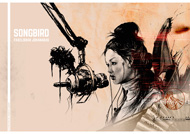
Vincent Sammy: “Songbird”, Interzone 257
Sarah Anne Langton: Cover of Jews Versus Zombies, Jurassic London

Sunday, January 17, 2016

BSFA longlist

I haven't read that much short fiction on the BSFA longlist yet, but here are a few of my possibles:

Tim Maughan, "Special Economic Zone" (Medium)
Sam Kriss, "Manifesto of the Committee to Abolish Outer Space" (The New Inquiry)
Alyssa Wong, "Hungry Daughters of Starving Mothers" (Nightmare)
Yoon Ha Lee, "Variations on Apple" (Tor.com)
Alix E. Harrow, "The Animal Women" (Strange Horizons)

May add to, or even subtract from this list.

Tim Maughan's probably isn't science fiction and it's definitely not a story. It's probably the most solid contender for me.

Yoon Ha Lee is one of the few writers whose language I feel actually deserves, at least intermittently, those common encomiums "rich" and perhaps "poetic" and perhaps even "lyrical." (Especially the more disintegratingly courtly and/or Metaphysical kinds of lyricism: Petrarch, Donne. Often prose described in these terms strikes me as a sleazy and linguistically predictable attempt to woo by introducing heightened straightforward sensuality -- and introducing it at every opportunity and in multiple dimensions (diction, prosody, subject matter). I am depraved and easily wooed and so it sort of works, but the hook-up is regrettable. Whereas Yoon Ha Lee's cryptic similes can actually assail the readerly nostril with the sickly-sweet reek of foundered courtships).

Sam Kriss's story has a brief appearance in my economic speculative fiction listicle.

Earlier:

BSFA's new nomination system
How to reform the Hugos
The best looks back at 2015 of 2015

Wednesday, December 23, 2015

BSFA noms

Just real quick: haven't fully checked out eligibility etc. but will probably nominate Sandra Newman, Country of Ice Cream Star, Adam Roberts, Rave & Let Die, Steve Aylett, Heart of the Original & others tba. Here is the list of suggestions (& here is where you can suggest eligible works).
Might try to squeeze in some haphazard short fiction reading before the end of the year: AC Wise has a pretty intriguing looking list & Ethan Robinson looked at hundreds of stories in half the year. Nina Allan has some short sf recommendations and some great non-fiction recommendations (to which you should add something by Nina Allan).

Update: Oops, Ice Cream isn't actually eligible -- seems to have been published in 2014 in the UK and 2015 in the US. I wonder about the eligibility of Adam Roberts's The Thing Itself, which was published at the very end of 2015 but says it was published in 2016? (UPDATE: It's on the longlist). Also have fixed the AC Wise link, and this from Wise is a hella useful hub.

Update: Okay, I have to admit the BSFA process confused me a bit. I am easily confused. I think this is how it works, although I sound kind of paranoid and weird even to myself.

Suggestions and round one
There is a window for both suggestions and nominations from 1 September to 31 December. Anyone can suggest anything, so long as it is eligible. Suggestions are different from nominations. You don't have to be a BSFA member to suggest something. Suggestions basically go into a big crowdsourced eligibility list, which is this Googledoc spreadsheet. Updates are more-or-less live. You could suggest your own writing if you want to. You make these suggestions using this form.

At the same time as suggestions are being gathered, BSFA members can make up to four round one nominations in each category. This is done using the form at the bottom of this page. I assume (but I can't find anything to confirm it) that the output will be a longlist of all nominations received, in order of popularity. Perhaps it will also say exactly how many people nominated each work. (UPDATE: No, it's just a big list in alphabetical order).

Round two
Then, from 1 January to 31 January, BSFA members can vote for works on the longlist to determine what actually gets onto the ballot. I'm not sure how that works: perhaps each member has four unranked votes per category, or perhaps some other system. (UPDATE: yep, the four votes thing). I assume the output will be a ballot of five works per category (unless there are ties, and/or some of the most-nominated five works get fewer than the minimum of three second round votes each). The form and the instructions will appear when they are needed, on the same page which currently hosts the round one nominations form.

Voting
Then the shortlist is assembled for each categories, the ballots are sent out, and BSFA members have until Eastercon (in April) to vote using a ranked preference system.

If I have got it right, there are some things I quite like about it. It's useful to throw a wide net at the suggestions stage. Then seeing the slightly more filtered longlist might be productive and fun: if there are some much-nominated things you've never heard of, you've got enough time to check them out; if something absolutely fantastic has slipped onto the lower reaches, you might have time to hose everyone down with your zeal. (UPDATE: the first bit holds true, but not really the second bit, since it's not in order of popularity after all).

An obvious question is how it would stand up to Puppy-style slating etc., though the UK doesn't really do that, or school shootings, in quite the same way yet. While we're at it, here's my proposal for reforming the Hugos. Last year, when there was only one round of BSFA nominations, I suggested four nominations per member was too few: with a small membership, and diffuse voting in the short story category, only three stories got three or more nominations. (I think that's what happened). The tweaks this time round should go some way to fixing that, if people who nominated the lower reaches in round one generally drift toward the upper reaches in round two, or seriously drum up support for their original nominations. We'll see. Maybe Marine le Pen will do really well on the longlist, but not on the shortlist. (The BSFA don't seem to be using the word "longlist," so some of this may be wrong. (UPDATE: OK, now everyone's talking about the "longlist")).

tl;dr: I think I like the new system!

Update: I've already made my noms but it just occurred to me, too late, that maybe I should have nominated this post, by Édouard Brière-Allard, a fairly numbingly persnickety and studious response to Laura J. Mixon's even more numbingly persnickety and studious Hugo-winning take-down of the collected trolls and criticism of Requires Hate. Whatever you think of the controversy, or wherever you are placed in it, or whatever personal suffering you've -- oh Gawd, I can't really avoid bringing this up without having a Stance, can I? For what it's worth, I've no clue how to navigate the huge mass of claim and counterclaim, and I basically just tend to fall back on the heuristic that Requires Hate's politics feel far more sensible to me than what I reasonably presume Mixon's politics are, together with the presumption that the conflict was surely political as well as interpersonal and/or literary-critical and/or about "how you should treat people" -- the three of us should hang out and get to the bottom of it! -- so, whatever you think of the controversy, it's possible you might admire Brière-Allard's handling of the overblown and Grand-Guignol idiom of contemporary online social justice, and the bewilderment or bad faith in which it is frequently received by liberals, and his gently relentless dismantling of Mixon's scientism and tacit claims to objective systematicity. Of course, it's a sly piece too: because its own scientism can always be disavowed as a knowing, quasi-satiric pseudo-scientism. Anyway, like a lot of us, I was brought up to believe that you can always show any tacit claim to objective systematicity to be hooey, but I think Brière-Allard has gone ahead and done it here.

But I don't know? -- I guess the only good I can really imagine coming from Brière-Allard's piece sliding onto the BSFA longlist, or even the ballot shortlist, would be if it got a few more hits, but maybe not gazillions, and if the piece's getting mildly valorized were mediated through that fairly pervasive, though probably not pervasive enough, USian perception of British eccentricity, where that perception is intermixed with a vague suspicion that those Brits might just be onto something, with their Monty Python and their anarchism and their Grimes and their NHS, as well as with the concrete comfort that if they are onto something, it will never matter, because they will always insist on "communicating" it through the discursive equivalent of a post-supernova star collapsing in under its own gravity and, especially, its own awkwardness. Because if it weren't softened in some way, it might just be reviving old griefs and fanning the wrong kind of flames. Oh I'm just vice-signalling here basically. (UPDATE: it's on the longlist).

Wednesday, December 2, 2015

Obligatory Eligibility Post

In 2015 I authored the following Hugo-eligible listicles, playlists and thought lists:

Top Ten Meta-Meta Listicle Entries of 2015
Top Ten Just in Case You Know this Isn't Real Right of 2015
Top Ten Utopias It Would Just Be Okay but Nothing Special to Go Live in of 2015
Top Ten Titles that Look Really Weird if You Lowercase All Articles, Conjunctions and Prepositions of 2015
Ten Unbelievable Hexes which these High Fantasy Authors ACTUALLY Predicted! of 2015
Top Ten Indistinguishabilities of Magic and Technology of 2015
The Ten Least Influential SF Writers of 2015
Top Ten Republican Presidential Candidates of 2016 of 2015
Top Ten Recommended This Actual Specific Blog This One My Own Blog The One Called Aaaargh Or Something of 2015
Greatest Ten Popes of 2015
Top Ten Algae Bear Batchelards of 2015
Best Ten BristolCons of 2015
Greatest LonCon 2014 of 2015
Top Ten Animals That It Would Be Great If They Came Up To Bernie Sanders In A Rally Sometime Next Year of 2015
Greatest Ten Bristols of 2015
Top Infinite Ook Vloggers of 2015
Top Ten Glitterbombed Bards of 2015
Top Ten "Did You See Which Way That Elf Ran? / You're Only Lying To Yourself Fam"s of 2015
Recommended Greatest Ten Proposed Hugo Awards Nomination Systems of 2014 You Have to Try of 2015
Recommended Top Ten Interzones of 2015
Recommended Top Ten Tor.coms of 2015
Recommended Top Tentacles of 2015
Greatest Ever Ten Flights of Rapturous Passion Formally Arranged as Debunking of Thomas Piketty of 2015 of all time of 2015
Top Ten of Some Thing it is Hard to Imagine Experiencing More than about Ten Instances of During a Single Year of 2015
Top Ten NaNoWriMos no not a Book Written Then the Actual Month Itself Top Ten of Those in 2015
Top Ten Non-Complications of Sexual Consent of 2015
Top Ten No-Longer-Honored Racist Heads of 2015
Top Ten Remember Poetry of 2015
Top Ten Books of 2015 that were Published after Final Top Ten Books of 2015 List Was Finally Finalized
Top Ten Somewhat Quick Attribution of Trollhoods of 2015
Greatest Ten Suffixes for Troll to Suggest in One Word the State of Being a Troll of 2015
Top Ten Identity Characteristics Excluding Economic Class of 2015
Top Ten Nuggets of News Discovered in Actual Mainstream Newspapers like Some Kind of Ultra-Rare Drop Items in Some Kind of MMORPG of 2015
Top Ten Cory Doctorows of 2015
Best Ten Women Writers (plus one bonus fella-legion!) of 2015
Top Ten Twelve Tomorrowses 2016 with Only Eleven Tomorrows in Them of 2015
Best Ten Movies of 2015
Top Ten Names of ISIS in 2015
Ten Unmissable Trojan Relatabilities of 2015
Top Ten Elif Batumans of 2015
Top Ten Jules Verne Diesels of 2015
Top Ten Purposeless Advisory Nuggets from a Suctionless Nan of 2015
Favorite Ten Liberticides of 2015
Top Ten Small Back Gardens whose Most Rotting Qualities Strike Your Heart in a Moment of Generalized Sensory Derangement as a Kind of "Blossoming" of "Winter Foliage" this "Winter Foliage" Comprising Mud and Desiccated but Soaking Plant Matter of 2015
Top Ten Non-Twitters of 2015
Top Ten Forrealthoughs of 2015
Ten Unmissable Social Atomizations of 2015
Top Ten Neutropic Noons of 2015
Greatest Ten Handfuls of Nuts before Morning Ketamine Yoga of 2015
Top Ten Newmans of 2015
Greatest Ten Netflix Passwords of 2015 of All Time
Top Ten Views of the Time of 2015
Unbeatable Ten Named Unnameables of 2015
Favorite Ten Groups of Ten Steve Ayletts for a Total of One Hundred Steve Ayletts of 2015
All Georg Simmels Ranked from Best to Worst of 2015
Top Ten Cis Clinaman of 2015
Top Ten Lone Wolf Shooters of 2015
Top Ten Lives that Mattered in 2015
Most Perfect Ten Complete Gene Sequencing of a Micro-Aggression of 2015
Top Ten Youtube Videos that You I Found Funnier than Anything I Had Ever Experienced in my Life and Yet Still Somehow not Funny Enough for the Person who was Showing them to Me in 2015
Top Ten Terry Pratchetts of 2015
Top Ten Father Goroits Joining the Marvel Cinematic Universe in 2015 of 2015
Top Ten Qualities of 2015
Top Ten Unaccountable Euphorias of 2015
Top Ten Mortality Mornings of 2015
Best Ten Sepp Blatters of 2015
Top Ten Totally Bizarre Reviews Written by Me whose Deformations are Partly Attributable to an Exponentially Growing and Ratcheting Fear of Spoilers and whose Subjects' Authors are Moreover Almost Certainly Talking about Even the Most Unarguable of those Spoilers to their Vast Fanbases by way of Promotional Activity on Social Media at this Very Moment
Best Ten Carious Unicorns Predicted by Charlie Stross in Equiod That Actually Came True! of 2016
Top Ten Storybundles Curated by Ann and Jeff Vandermeer Featuring Among Others Berit Ellingsen and a Bestiary with Like China Mievelle of 2015
Top Ten Start-Ups Whose Idea is that Storybundle Could be Unbundled of 2015 of Dune of 2015
Best Ten Black Vein Votives of 2015
Top Ten China Mievelles of 2015
Top Ten This is When I Admit I Always Do the Acute Accent by Copy-Pasting it of 2015
Best Ten Recommended Books I Loved this Year about a Laseriferous Organelle Cocked in a Beneficent 3-Dimensionally Convex Dalek like a Little Hatching Sun in Hammock Slingshot of 2015
Top Ten OK I Don't Know Much About China Mievelle but I Did Really Really Like The City & The City & Perdito Street Station and he is a Trotskyist or at Least Leftist in Some Way but also Someone I Can't Remember Who But I Think it Was Someone whose Judgment I Trust in Such Matters Did Mention he was Problematic for Some Reason I Can't Really Remember Either so a Balanced Attitude for me to Take Given All That Is Probably to Pretty Much Contemptuously Refuse to Spell his Name Properly from Now On at Least till he Clears this Whole Thing up of 2015
Top Ten Pig Ceremonies of 2015
Top Nine Tens of 2015
Top Ten Medical Humanities of 2015
Top Ten Powers of Storytelling of 2015
Best Ten People Getting Healed by a Kind of Misunderstanding of 2015
Favorite Ten Twitters of 2015
Top Ten Grout Crystal Klout Gris-Gris of 2015
Top Ten Landscaping Change a Series of Talks, Art, Poetry, Free Wine and More Here in Bristol the Next One Being 10 December on the Theme of "Route!" of 2015
Top Ten Favorite Ideas that the Idea is Being Creative of 2015
Top Ten Raptures of Relaxation Upon Realizing How Prohibitively High the Level of Labor Required to in Good Conscience Offer an even Tentative Semi-Informed Opinion upon Some Subject of Some Pretty Serious Moment of 2015
Top Ten Contexts of 2015
Top Ten Bit Lips of 2015
Top Ten Vin Diesel Natural 20 Critical Hits of 2015
Greatest Ten Busted Superviral Satires of 2015
Top Ten Simple Laughs With Which a Seraph Fell Tremblingly Apart in 2015
Best Ten Microscopic Gills Seething on the Sensual Margin of 2015
Best Ten Bad Sex Awards of 2015
Best Ten Bad Love Awards of 2015
Top Ten a Man
Top Ten a Face
Top Ten a Bus
Top Ten Climate Chaos
Top Ten Credit
Top Ten War

As these were all published in qualifying markets, mostly National Geographic in the Murdoch era, I would appreciate if you would consider them for nomination!

Tuesday, August 25, 2015

Stupid Obvious Hugo Question

Yo. The Puppies had a go at gaming the Hugo Awards but they lost resoundingly, and (I assume?) rules will change to make Hugo Awards a bit more resilient to gaming next time round. Let's see what happens next year! Yeah! ("Hi Sad Puppies 2016. Please roll 1d4 and vote only for the corresponding name ...")

Also, the full Hugo data came out and it became (mostly) obvious who was edged out of the shortlists by the Puppies slates. And some of those authors, and their friends & fans & whoever, are probably a little sad about that, though they're probably mostly looking on the funny side, or the bright side, or some other great side -- I don't know, the halloumi-flavoured side or something. Gah!

So, I'm wondering:

Would fandom be interested in holding a kind of one-off, informal, bolt-on prize, drawing on the same data? 

Kind of to see what would have happened? A special prize, just for this one weird year, where everyone who could vote in the Hugo Awards can vote again, but on short-lists where all the Puppies-slated nominees have been removed, and other authors bumped up to fill their spots?

(Or indeed, if possible, generating a set of shortlists for this year by running whatever rules will be used next year on the nomination data?)

Call these one-off awards the Hug0 Awards or something? Or Hugos Prime? Okay, probably those names are a bit close to the real thing, at least without some kind of official endorsement. So call them the Stalinist Disappearing Wrongthink Paint Happy Faces on Sad Puppies Awards? Whatever you called it, it might generate significant prestige! Or not! Yeah!

It would never be a perfect exercise. It's impossible to interpret and interact with the data as though the Puppies never happened at all. For instance, there's no way to figure out which Puppies-slated nominees might still have made it onto the ballot without the Puppies situation -- or at least, without full Puppies situation, with only discreet, informal bloc-building and virality effects -- and who knows, whether some of them might even have won if they hadn't withdrawn, or forged ahead all sticky and gross with Puppies licking, unable to draw love from a non-Puppies crowd. And there's also no way to be fair to whatever vaguely Puppies-friendly authors Puppies followers might have voted for who weren't included on the Puppies slates.

But you could do a pretty interesting approximation of an alternate timeline Hugos.

Is there appetite for that kind of thing? Is something like it already happening?

Probably not, I'm guessing? Better to move forward not back? Better to move left not right? Better to move mercy not nostalgia? Better to dwell in a floaty bittersweet ethereal Schrödinger's Hugos, where everyone who might have won in a way has won, and everyone on the long-list just shares in the ectoplasmic superpositioned rocket, with Noah Ward as the trustee, better that than NAIL EVERYTHING DOWN EXACTLY WITH ROCKETS? Better that than have most nominees wind up sad about losing in two timelines, and even the winners a bit disappointed that they won only on the wrong timeline?

Or maybe it'd be fun. Thought I'd ask.

*   *   *

Earlier posts: Quick Hugo Thought (in a very similar vein). Happy Puppies > ideas for reforming Hugos (which might also work for a kind of bolt-on award layer run on Hugo data).

Elsewhere: File 770. Wired on Hugos. We've Always Been Here Storify about that Wired article (which I think maybe has led to it being a bit amended?).

PS: There's a super-quick way of doing something a bit similar, which is just to assume the winner is whoever gets the most nominations but avoids being included on a Puppies slate. Or a variation: the winner is whoever the winner was except the No Awards are replaced with whoever got the most nominations but avoided being included on a Puppies slate.

PPS: Update! Doing an ickle bit of research, I come across GRRM's Alfie Awards, and the poor ol' Paranoiappies who have doxxed them as the SECRET REAL SJW HUGO AWARDS. Because, you know, a secret Hugo you can't tell anybody about would definitely be as good as a normal one. Better. Shhhhh. Also, I come across Jay Maynard's proposal for a Trust Level Trophy.

PPPS: Update! A Kickstarted anthology. Yeah that's a better idea.

Monday, May 4, 2015

Quick Hugo thought

If none of this makes any sense to you, lemme suggest counting yourself lucky and not looking into it any further.

Some folk out there seem to be hemming and hawing between (a) No-Awarding the Puppies selections or (b) No-Awarding every Puppy-dominated category, since it would be totally unfair to give "The Day the World Turned Upside Down" a Hugo by default, and pretty unfair to give e.g. The Goblin Emperor a Hugo with reduced competition.

I'm hemming and possibly even hawing too, but I know exactly what would let me make up my mind: releasing the full nomination data. 

That way you could see who else could have been on the ballot. Then the procedure's simple: you construct a virtual ballot from a Puppy-free world (the kind of Stalinist disappearing we SJWs lurve) and make your choice. If your selection from the virtual ballot is on the real ballot as well, you vote for them above No Award; otherwise you No Award the whole category.

But we don't have the full nomination data, right?

§

Also: Nate Silver has predicted a hung Hugo in the novel category, which means we're likely to see Skin Game forming a coalition novel with Ancillary Sword ... if they can reach an agreement. (Not really).

Elsewhere: "Instead of a sword, I carry two sets of tactical laser turrets." A frosty read-through of Puppy nominees by secritcrush.

Earlier: my sample proposal for reforming the voting system for the Hugo Awards. And possibly for the UK Parliament, now that I think about it. (Basically I've solved everything? Anyone want to help me work out the details? Any nifty coders, for example?)

§

PS: Maybe it's a pity that the Hugo nomination rules are likely to be altered to reduce the influence of slates. Each iteration of the Sad Puppies campaign has been a little different, and it might be interesting to watch future mutations under the twin suns of Outsider Cachet and Basic Decency. Could they perhaps scrape together a genuinely diverse slate next year in terms of authorship, while still promoting mainly tie-in fiction, military science fiction, and conservative and/or libertarian science fiction? Could they exorcise Rabid Puppies and GamerGate? They are only a few tweaks away from someone like me giving them the time of day -- reading their nominations with a carjack-opened mind -- though I'm dubious whether they could make those tweaks without alienating their core supporters.

Wednesday, April 29, 2015

WorldCon 2017: Site Selection Ballot

I always base my decisions about where to put WorldCon on wherever according to my preconceptions has the most reindeer nearby and possibly in supermarkets. So provisionally my ballot looks like this:

1) Helsinki
2) Montreal
3) Shizuoka
4) Washington DC

... although Joseph Tomaras has just about convinced me to switch two and three. He points out, "the sight of Mount Fuji would just get me thinking, 'why should I spend my time in Japan talking about science fiction in a convention center, rather than seeing Japan?'" and moves Shizuoka down a slot on his ballot. I'm the opposite. Whenever I get to go somewhere I've always really wanted to go, I get really nervous and rabid unless I have something stupid to do while I'm there.

§

PS: From 2014, some terrorist-looking-dude trying to undermine free democracy as per: "There Should Be No More Back-To-Back US Worldcons. Ever."

PPS: Wish you could opt out of that additional $40 site selection fee.

Wednesday, April 8, 2015

Happy Puppies

There's a fantastically involved thread over at Making Light about voting systems and the Hugo Awards.

I've skimmed the conversation in great depth, & it seems like it's genuinely exemplifying two intellectual virtues allegedly core to the sf community's skillset:

(1) thoughtful extrapolation, and a certain kind of care & rigor, especially in mathematical and behavioural economic modes

(2) some IMAGINATION! Including imaginative reconfigurations of relatively recent socio-technological phenomena. E.g. there's imagination in the suggestion of an open list, updated in real time, of who's been nominated so far; the suggestion of a kind of semantic element to voting (an anti-sock puppetry rationale sentence); or in the suggestion of an opaque "black box" that disdains to explain its workings to mere puny humans.

BUT. Obviously I'd like to see even MORE imagination.

Science fiction is bursting with importantly wild thinking about the harvesting and interpretation of data, and the ways in which it can be coupled to human and post-human thinking and feeling. Why shouldn't our awards reflect that? Why shouldn't our awards be unlike any other? Why should we have to look solely to political science for models and methods? Why not look to science fiction?

For instance. Embrace debate. Think less in terms of an electoral system, more in terms of a weird new social media site where reading, fanning, and nominating - maybe even writing, collaborating, publishing, other things - are all linked together.

Or. Embrace bureaucratic tinkering. Add a Voting System category. Each year votes are aggregated according to whatever system won the vote last year.

Or. Embrace time travel. Any book hitting exactly 88 nominations per hour gets eliminated BUT it reappears on a FUTURE ballot (or even a past ballot somehow? This voting system would have to include provisions for resolving temporal paradoxes: e.g. if Scalzi's novel gets knocked back to 1990 and ends up displacing Hyperion, has it effectively killed one of its grandfathers? Will there be branching universes? Or will we be forced to realise that, by the Novikov self-consistency principle, somehow Hyperion was Lock In all along?)

Or. Embrace constitutionalism, and link the Hugos in some intricate way to the other big important vote: the bids to host WorldCon! E.g. establish a system of checks, balances and trade-offs so that if Anglophone geographies are dominating the Hugo nominations, there are at least compensatory nudges making it slightly harder for Anglophone locations to win the bids.

Or. Embrace war. Create a system that celebrates and encourages tactics, which does not try to suppress or mask our political differences but magnifies and elaborates them. Perhaps instead of a ballot you have a "deck" or "team" in which you choose your books, stories, films etc. and can also assign them various powers, tools, weapons, factional alliances, behaviours. Instead of simply counting, the whole battle or adventure or whatever plays out on a ginormous screen at the awards ceremony, accompanied by some pretty serious atmosphere.

Update, May 2016: With a little advice and encouragement from friends and Strangers on the Internet, I've gone ahead and made this a Thing (or almost a Thing). It's called the Sputnik Awards, and voting is now open! Call it an experiment in e-democracy; a collective experiential learning exercise; a pioneering use of people, technology and networks simply for the sake of it; the first phase of a new literary prize focusing on political and in particular socialist science fiction; or maybe just a strange prank. Whatever you call it, voting is now open.

Or something else. What can we come up with?

Why?

Partly because: whether or not bold, weird, glowing, exciting, reverberating reforms "fix" the awards, they have the capacity to BE a kind of speculative research valuable for its own sake. Or even: the awards have the potential to BE SCIENCE FICTION THEMSELVES.

And just because, hey, we're looking at options, so let's REALLY LOOK.

* * *

PS: There are a billion posts about the Hugo stuff more generally, BTW. See e.g. blogroll to the east, e.g. the suggestion of luring the entire American right into the Hugo Awards and setting fire to it, e.g. Cecily Kane pointing out that there are already thoughtful critiques of "Left" (?) SF&F (& the Puppies' half-assed crititasting is a step backward disguised as a step forward), and e.g. Amal El-Mohtar's suggestion of quietly adding recent events in genre literary awards to a more compendious list of horrific recent events.

PPS: These awards are important in the sense of fully invoking political faculties - political cunning, political passions, political association, AGON - every bit as thoroughly as, say, the UK General Election next month, but without the same weight as regards who gets deceived, deprived, degraded, uprooted, imprisoned, tortured, enslaved, raped, abandoned, murdered, and who doesn't!

PPPS: Earlier -- Gamified Personal Finance, Literary Awards Detox Year,
Scheme for Indie Award, Regurgitation.

PPPPS: I need to actually do a couple dry runs of that system, with dummy data, before anybody believes I'm serious, right? Okay, maybe I'll get round to that :P

PPPPPS: Update > also see Mike Selinker's "A Game Designer Tries to Fix the Hugo Awards"!

PPPPPPS: Update! The great Cat Valente is leading a conversation about making up some interesting awards over at File 770.

Tuesday, March 3, 2015

Hugo

I won't get round to doing a proper fanfare post to my nomination ruminations, but here's a sequence of rapid parps. Maybe I'll lard the parps with grace notes (grace nodes?) over the next couple days. Aargh. You know what I'm saying: haven't-got-time-to-do-a-proper-nominations-post-so-here's-a-slapdash-one.

NOVEL: Sandra Newman's The Country of Ice Cream Star. Jeff Vandermeer, Area X: The Southern Reach Trilogy.

SHORT FICTION / NOVELLA / NOVELETTE: Here's a list of some shorter fiction I liked.

CAMPBELL AWARD

Have you read Alyssa Wong's "The Fisher Queen" and "Santos de Sampaguitas"?

I don't know Carmen Maria Machado's work very well, but I liked "Help Me Follow my Sister into the Land of the Dead" in its brutal fidelity to the crowdfundfic form, and I really liked "The Husband Stitch," which is fucky, twee and violent all at once. The "quilt-work of tales and fragments" form can be a bit of a turn-off for me these days -- I've written elsewhere how I feel about these "stories" you guys all love -- but the spermy leg and the dirty fingers were a huge turn-on so that more than evens out, and the instructions on how to read the story aloud were very helpful. But also, it's serious: a drab reductive summary (in so 2014 diction) might be: a sex positive allegory of the co-implication of flourishing sexuality with intimate partner violence, within a wider setting of patriarchal values, which poses uncomfortable questions for some of the standard emancipatory narratives of liberal feminism. 

In his reviews and criticism, Paul Graham Raven has a way of making science fiction actually do what it so often prides itself on doing: tell us about the world we live in, with special focus on science, technology and engineering, and on everything that is latent and still emerging within social relations and social performance. I'm 99% sure he'd be eligible for a Campbell following the publication of "Los Piratas del Mar de Plastico (Pirates of the Plastic Ocean)" in Twelve Tomorrows. Also, whereas many nominees would probably be pleased to have been nominated, he might well be a bit cross.

Or ... there anything that actually definitely says you can't win it twice? Vote for Sofia Samatar again!

Also check out: J.Y. Yang, S.L. Huang, Joseph Tomaras, Isabel Yap, Bonnie Jo Stufflebeam, Vajra Chandrasekera, Alix E. Harrow, who I think are all eligible.

*

I was right about what Machado's ribbon q.v. was BTW.

Orthography riddle time, preciousssfuckers! Nobody has yet got my "you-know-it-or-you-don't" riddle about why ",,,e" fills me with humbling dismay, although there were some good goat-based etc. guesses. Here's another. In what sense is the word "Hugo" redundant?

Saturday, February 21, 2015

I am propped up in terror, thinking about prizes

There are three short stories nominated for the BSFA this year:
Ruth E J Booth for "The Honey Trap," published in La Femme, Newcon Press
Octavia Cade for "The Mussel Eater,"  published by The Book Smugglers
Benjanun Sriduangkaew for "Scale Bright," published by Immersion Press
I guess that's why they call 'em shortlists. Then again, the novel category has eight nominations (because of a tie for fifth place), so I kind of wonder how it happened. Why have only three stories made it onto the shortlist?

Either short fiction had a big tie for fourth place, which would have produced a hugely unwieldy list, so the BSFA went with a list of three rather than a list of fifty squillion, or (and I guess this is more likely?) only three stories managed to get up to the minimum of three nominations.

In a way that's not too surprising, given just how much short fiction is out there -- the nominations are going to be scattered pretty thinly. If so, it could suggest two things:

(1) I think this is the first year BSFA nominations have been restricted to four per member? Maybe if it had been, like, six nominations, then one or two more stories would have snuck onto the list (and perhaps the fifth-place tie for novel would also have been broken). That's assuming we think five is a good-ish size for a shortlist, and are kind of aiming for that size.

(2) It's perhaps an argument for authors who have published a lot in a particular year to go ahead and say which story they think is best to mitigate nominations-splitting. This may of course rub some readers up the wrong way ("how dare you tell me what to vote for!"). Those wrong-way-rubbed-up readers probably have a point, and they are free to punish any annoyingly bossy author by taking their nominations elsewhere. But if you're anything like me, you would probably prefer to see the author of your favourite story get nominated, even if it's for a different story, than for prolific and consistently good authors to receive split nominations and not even make the shortlist. (Lots of readers chatting about what they like could also do the job). Yoon Ha Lee wrote ten stories last year.

I could be completely wrong and confused about all of that.

§

I'm pretty interested in these prizes at the moment. I didn't used to be, and I don't know how long it will last. One thing which is quite striking is that the mechanisms for pinning rosettes on speculative fiction are so un-speculative themselves. Fandom could administer these prizes in any weird way we choose. There could at least be weird categories: most prophetic use of existing tech, most deniably fascist, best social justice war song, reflexive award for most contempt for receipt of this award. Hmm: go on, you think of some. Or there could be liquid democracy. Or there could be #nanowrimo-style tie-breakers, or Gladiators stuff.

If you are at all interested in avant-garde politics of any kind, you perk up whenever you spot a space where something new might be tested out, however heavily booked up that space is.

Here's another great idea: what if we all agreed to forego genre prizes for a year? No Nebula, no Hugo, no BSFA, no Kitschies, no World Fantasy Award, no Clarke, and maybe no Booker and no James Tait Black either, nope, nope, nope. Let's give some folks who probably deserve a rest a rest. Let's detox and see how it feels.

OK, maybe that's unfair to the authors who've worked hard on something snazzy, which happens to be coming out in the Year of No Prizes. But that's pretty easily solved: just let them be eligible in the following year (or perhaps shoogle things around, so that you have three or four slightly larger pools battling it out over three or four years, rather than one vast pool following the Year of No Prizes).

Why? The only way I can ever imagine it happening would be some kind of superviral campaign, filled with Big Name Authors, to donate all the prize money toward setting fandom's house in order in some way, or perhaps to some pressing cause. But that wouldn't be the real reason, for me. I'd just like to see what would happen.

§

Seriously was it just me and Ian Sales who nominated Tim Maughan's "Four Days of Christmas"? I feel like Ian Sales is stuck in a lift with me, and we are both wearing those elf hats.

The non-fiction complements to Tim Maghaun's story are worth reading. "Yiwu: the Chinese city where Christmas is made and sold." "The invisible network that keeps the world running."

§

Cecily Kane's blog post "The Drama Around" seems to me to contain some very smart, clear and constructive thinking about identity politics in short fiction. It opens up questions about tensions among the diverse hopes and aspirations of diverse fiction, particularly in the context of prizes.

§

Who called it the John W. Campbell Award for Best New Writer rather than the Noobula?

Friday, February 20, 2015

Murmuration

Among this year's Nebula nominees, I was happy to see Alyssa Wong's "The Fisher Queen." I kind of feel like we've reached peak mythology reworking, so I was surprised to discover how easily that story drew me in and started swinging me around.
... Most of the mermaids tangled in the nets are pale, with silvery tails and lithe bodies. This one is dark brown, its lower body thick, blobby, and inelegant, tapering to a blunt point instead of a single fin. Its entire body is glazed with a slimy coating, covered in spines and frondlike appendages. Rounded, skeletal pods hang from its waist, each about the size of an infant ...
One of the things I like about the story is its origin story:
I wrote “The Fisher Queen” as a wedding present for my friend, Katie. Since her favorite fairytale is “The Little Mermaid,” I really wanted to write her a mermaid story.

Sunday, January 25, 2015

Eligibility post redux

Continuing the season of THE BALLOT OF ALL POSSIBLE AWARDS ...

Here's a post from Ian Sales, more-or-less opposing the practice of putting up eligibility posts: although if you frack down for details, he's mainly against gigantic authors going on rampaging Vote For Me Rarrr campaigns through the pre-awards buzz, which should be, he reasonably reckons, a fan space. Also see Amal El-Mohtar's post which more-or-less opposes the practice of awkward eggshell dances (and internalised silencing).

So, for simply keeping informed about what an author's been up to, a well-maintained bibliography like Tim Maughan's here ain't too functionally different from a "this is what I wrote this year" post like Kat Howard's; they're both more-or-less equally handy & appreciated.

So does it make a difference whether you add the header "Eligibility Post!" and the sign-off "get votin' minions!"? My guess is that it does, but not a large or consistent difference. (Even a small difference can be amplified, obviously. A butterfly who flaps his wings in Peru and then tweets about it ten times daily to 50,000 loyal fans . . .)

But one element which is likely to make something of a difference is when an author picks which of their publications are their favourites. E.g., Rose Lemberg's eligibility post highlights two out of three stories and two out of eleven poems for consideration.

On one hand, it can be a kind of courteous and unassuming move: you're alert to the fact that readers may be whisking through looking for a kind of audition piece; if they like the one you recommend, they may read some of your others . . .  but they want to know the best place to start. On the other hand, there is inevitably at least a subtext of: psst, don't split the vote! If in doubt, nominate / vote for this one!

Eligibility is only half the issue. The other half is vote splitting.

So . . . I'm not sure what I think about this practice, but I think on balance I like it.

I like it, if only because tactical second-guessing (as in second sense of second-guessing) is second nature to me (argh here): what I mean is, where there is a risk of a split vote, it feels weirdly solipsistic not to try to take into account how others will vote. (And besides, I have way too much regard for my own sparkly special judgment to trust it in any context where its consequences involve intense interaction with the judgments of others). So a nudge from an author, either to roll with or to resist, can break the trance of indecision which inevitably results. (See my spine-free prevaricating over which if any Jonathan McCalmont column to nominate). Also it's interesting to hear authors' savagely reductive opinions about the best things they've written. If an author truly honestly has no idea, after genuinely trying to work it out, that is also really interesting to know.

So, yes. On balance, I like it, so for those authors who do identify as eligibility post-eligible, I wish more would pick out a favourite or two in their eligibility posts. (Even more so if they've published more than three or four short stories in a year. Although perhaps less so if they have biggish visibility, where that "authors in fan spaces!" point may start to apply, albeit qualified & transformed by a kind of #dontselfletyourvotegetsplit version of #dontselfreject).

§

John Scalzi's gigantic eligibility thread is all right I guess, but it's not very neat. I should like it neat as a pin. Can there not be a sort of science fiction intern?

§

To find (/ write?): has there been a really good thorough smart revisiting of Barthes and Foucault on authorship vis-à-vis with contemporary folk theory regarding diverse fiction, diverse voices, and the visibility of marginalized experience as embodied in fictional narrative? It feels like there are endless delightful little refinements just waiting to happen, like a zephyr that can blow both ways simultaneously. (I wonder if the notion "splitting the vote" also needs to be somehow cunningly inducted into the notion of "the text" tbqh).

§

A faint coda to #dontselfreject: not an awkward eggshell dance, more just a single flake of eggshell discovered during an otherwise excellent omelette: who if anyone should self-reject? Should Adam Roberts who is good as it were self-reject in full knowledge that Vox Day who is not good will not? Etc. A bit #NotAllMen-y, I know.

§

Meanwhile Greece!

Wednesday, January 21, 2015

Short SF&F in 2014

Some excellent squirming parcels of short fiction silked over at The Spider's House (Nina Allan). Never let anyone tell you Silky Stories Are For Losers.

Here's Zeno Agency's Short Fiction Watch & Amal El-Mohtar's Something Rich & Strange.

& here's some short fiction published in 2014, mostly available on the web (I'll keep adding probably):

Tim Maughan, "The Four Days of Christmas" > see also BBC / Unknown Fields Division report
Alyssa Wong, "The Fisher Queen" > Wong interview
Yoon Ha Lee, "Always the Harvest" (Upgraded)
Timothy Thornton, "Sunrise"
Paul Graham Raven, "Los Piratas del Mar de Plastico (Pirates of the Plastic Ocean)" (Twelve Tomorrows) > in Jo Listicle
Carmen Maria Machado, "The Husband Stitch"
Project Itoh, "From the Nothing, With Love" (Phantasm Japan) > Mamatas endorsement
Sarah M. Watson, "The Internet of Paternalistic Things"
Sulagra Misna, "Homes of the Future"
Sofia Samatar, "Ogres of East Africa" (Long Hidden)
Oliver Buckram, "Two Truths and a Lie" (Interzone #252, May/Jun 14)
Adam Roberts, "Gross Thousand" (Noir)
Tim Maughan, "Ghost Hardware" (Arc 2.2) > fiction & fact three-legged race to the future
Yoon Ha Lee, "Combustion Hour"
Rose Lemberg, "A City on its Tentacles"
Kelly Link, "I Can See Right Through You"
Alix E. Harrow, "The Animal Women" > read by Anaea Lay
Cory Doctorow, "Huxleyed into the Full Orwell"
Elizabeth Bear, "This Chance Planet"
Rachel Swirsky, "Grand Jeté (The Great Leap)"
John Chu, "A Cost Benefit Analysis of the Proposed Trade-Offs for the Overhaul of the Barricade"
Tim Maughan, "Your Gaze"
Amal El-Mohtar, "The Truth About Owls" > intro
Paul Kincaid, "The Lost Domain"
M. John Harrison, The 4th Domain (Kindle: UK, US)
Martin McGrath, "King Rook" (Albedo One #45)
Rosanne Rabinowitz, "Living in the Vertical World" (Mind Seed)
Yoon Ha Lee, "Wine"
Linda Nagata, "Codename: Delphi"
JY Yang, "Storytelling for the Night Clerk"
Shira Lipkin, "The Final Girl"
Carmen Maria Machado, "Help Me Follow my Sister into the Land of the Dead"
N.K. Jemisin, "Walking Awake"
Polenth Blake, "Never the Same" > in Nina Allan BSFA listicle
Timothy Thornton, "Children's Story"
Genevieve Valentine, "A Dweller in Amenty"
Amal El-Mohtar, "The Lonely Sea in the Sky" (Lightspeed #49: Women Destroy Science Fiction!) > on the name Lucy
Bonnie Jo Stufflebeam, "The Damaged" (Interzone #250)
Cory Doctorow, "Petard: A Tale of Just Desserts" (Twelve Tomorrows) > in Jo listicle
Saladin Ahmed, "Without Faith, Without Law, Without Joy" > at Rich & Strange
Sofia Samatar, "How to Get Back to the Forest"
Kai Ashante Wilson, "The Devil in America"
Catherine F. King, "The Ninety-Ninth Bride"
Alex Dally MacFarlane, "Pocket Atlas of Planets"
Aliette de Bodard, "The Days of the War, as Red as Blood, as Dark as Bile"
Alix E. Harrow, "A Whisper in the Weld"
Rhiannon Rasmussen, "The Hymn of Ordeal, No. 23"
E Lily Yu, "The Urashima Effect"
Rose Lemberg, "Stalemate" > at Rich & Strange
Margaret Ronald, "The Innocence of Place"
Yoon Ha Lee, "The Bonedrake's Penace"
Kate Elliott, "The Courtship"
Theodora Goss, "Cimmeria: From the Journal of Imaginary Anthropology" > Ian Sales's BSFA #1
Bruce Sterling, "The Brain Dump"
Deborah Walker, "The Three Brother Cities" (Mind Seed)
Ian McDonald, "The Fifth Dragon" (Reach for Infinity)
Greg Egan, "Seventh Sight" (Upgraded)
Nick Mamatas, "The Burning Stones" (LampLight Vol. 3 #1)
Kameron Hurley, The Body Project
Rose Biggin, "A Game Proposition" (Irregularity)
Ken Liu, "The Regular" (Upgraded)
Lauren Beukes, "Slipping" (Twelve Tomorrows)
Gareth L. Powell, "This is How You Die" (Interzone #251, Mar/Apr 14)
Denni Schnapp, "Mind Seed" (Mind Seed)
Helen Callaghan, "Sex and the Single Hive Mind" (Mind Seed)
Angela Kendrick, "Half a Man" (Kindle: US, UK)

... this list saying much more about supply of variation than it does about adaptive fitness, i.e. more about my reading habits than about what's out there that deserves your tender scrutinies.

Monday, January 19, 2015

BSFA & Hugo noms

1) Just above there's a list of some short genre fiction which caught my attention in 2014, simply by lying sneakily in wait.

2) I was sort of thinking I might nominate Jonathan McCalmont's regular Interzone column, "Future Interrupted," for BSFA Best Non-Fiction? Obviously I agree with everything Jonathan says: I agree with everything everyone says. But I'm not 100% sure how eligibility would work (see note), so I guess I may just pick one, uh, iteration of the column.

By my reckoning only #5 to #7 made it to both Interzone and the Ruthless Culture blog during 2014. And I think I would plump for #6, if only because I'm not quite sure whether it shouldn't be nominated for Best Short Fiction instead:
Entitled ‘Not a Series of Waves, But an Ocean’, my sixth Future Interrupted column was an attempt to drive home the slipperiness of genre culture by coming up with a semi-credible alternative genre history. In my history, Hugo Gernsback was not an ambitious crook but a Robbe-Grillet-style figure who raged against the Victorian confines of the bourgeois novel by breaking down the boundaries between fiction and non-fiction. This is not so much history as it is headcanon.
However -- update! -- McCalmont-wise more nominations seem to be heading toward his blog post, "Short Fiction and the Feels," or perhaps "Uncanny / Deep Terraform / Deep Forests & Manicured Gardens" as a sequence? So I dunno. (UPDATE: Here's a really extensive bullet-pointed critique of all these posts by Ethan Robinson ... which is also framed as preparatory to a different kind of response altogether. I hope that happens).

3) Also, here's Nina Allan's non-fiction round-up. I would happily nominate Nina Allan's two BSFA nominations foci blog posts for Best Non-Fiction, if they did not sport the glaring (and no doubt deeply political) omission of Nina Allan's read-through of The Mammoth Book of SF Stories by Women.

4) Isn't it a bit funny that things like blog posts enjoy an advantage over things like big 250-odd page books -- and especially over monographs rather collections of essays -- in the nomination phase, just because of their relative familiarity / accessibility? When really it feels right to have that advantage handed to the books, which, all else being equal, are likely to represent a different scale of time and effort? One way of ameliorating that tendency is not being too squeamish about including a big 250-odd page book on your ballot just on the basis of a skim, or even just on the basis of recommendations by people you trust. And I think I may do that with at least one of the books Allan mentions. (Voting, it says deep within my heart, is another matter).

§

Note: McColumn started appearing in Interzone from May-June 2013, and online from November 2013. But you don't wait for this kind of thing to be collected before you nominate: a collection consisting mostly of work published in previous years would be ineligible.

You can nominate a blog post, but can you nominate a blog label? If texts which involve a modicum of computation were eligible, I'd probably like to nominate my personal SF&F Twitter list feed in all categories.

Monday, December 22, 2014

A New SFF Award (plan for)

Super quickly, this is how it'll work:

1) 100 or so Big Name Authors automatically entered
2) Everybody else self-nominates (indie authorship fine, & assumed to make up the bulk of entrants)
3) Entrants also act as slushpile readers: everyone who self-nominates is committed to reading & rating three books (& their own eligibility depends on delivering those ratings, except in the case of the BNAs)
4) Books are assigned randomly (& I think anonymously), & each book gets read twice
5) Certain administrative & audit procedures (waves hands arcanely)
6) The ratings generate a shortlist
7) Perhaps a panel of great judges picks the winner from the shortlist
8) Glory!
9) Interesting to see whether / which of the Big Name Authors flourish
10) The glory of the award comes because of its wide participation, BTW, not its huge purse

So lots of implementation nitty-gritty necessary, but that's the outline anyway.

No time to actually try to make this happen now! Or to give a detailed rationale. But putting it out there. Maybe one day? What do you think?

PS:

Would it gain traction? Would the shortlist be way too long? Is three books the right number? (Remember, we need some spare capacity to read those 100 or so BNAs. Maybe there should just be 10 BNAs). What's the risk that people just rate their two assigned books without actually reading them? (Perhaps the rating system involves five drop-down categories, three of which pertain to whether the book makes the shortlist, and the other two have a sort of checksum-esque function: qualities that people who have read the book are much more likely to agree on than people who haven't; if there's no match the slushpile judges don't automatically lose their eligibility, but the book does get reassigned to a third reader, and then its rating will be the mean (or hell, maybe the square? Should we do squares?) of the two rating sets that most closely resemble each other). What kind of systemic biases are we likely to encounter? (Could there be an algorithmic counterweighting to existing visibility biases?) What do we call it? Should the statue be the sploodgy head of a racist or not? What would actually be involved in step (6) -- just "the highest wins," or might we get a more interesting shortlist if we allow really divisive books? Is there a risk everyone rates really low, because they think they might stand a better chance of winning? Are there nudges & prompts we can use to minimize the "wasted" reading of books whose authors vanish into the ether & never deliver their own ratings? Could we use a credit system instead so you could read lots & lots in one year & be eligible for several years? Could there be an iterative, weighted aspect to it e.g. if an author who has historically tended to rate low suddenly rates something really high one year, it "counts" for more than if they were consistently positive about everything? Should the entry criterion be say "slushpile judge c.200,000 words each" rather than "slushpile judge three books each"? Should we get rid of that word "slushpile" because it has the wrong connotations? Would it be a better / more interestingly risky idea to have prizes not for "best book" but "[probably complimentary but ambiguous adjective] book"? What about other categories of prizes that are a bit more like the Oscars, and/or start to edge into crowdsourced literary criticism, e.g. "Best Character," "Best Twist," "Best Relationship Between Two Characters," "Best Non-Romantic Non-Nemesis Relationship Between Two Characters," "Best Cinematography," "Best Subversion of Well-Known Trope," "Best Non-Subversion of Well-Known Trope," "Most Cri," "Best Book With Really Objectionable Politics That Is Somehow Really Good Anyway," "Best Moral Complexity," "Best Texture Impervious to Commodification," "Spookiest Scene," "Good Sex Awards," "Best Page," "Actual LOL," "Best Attempt to Decisively Destroy Some Trope or Subgenre That Will Probably Just Revivify It," etc.? Who would be good to partner with -- maybe an established award like the Clarke or the Kitschies, as an extra category? Or maybe some kind of indie authorship hub? Or a con that isn't yet associated with an award? Could there somehow be a cash prize? What are we all going to wear?